
Southold Records for a Resident
No single public database proves current residence in Southold. That is the first thing to accept. A solid resident lookup joins records with different limits. The assessment roll names a tax-record owner and a mailing address. A voter search can confirm a matching registration. A recorded document places a party on a dated instrument. Court indexes, historical vital indexes, professional licenses, and library holdings help separate people who share a name. Describe each result for exactly what it is, never as a claim about everyone in a household.
| Record | What It Can Confirm | Southold Route | Access Boundary |
|---|---|---|---|
| Assessment roll | Owner of record, mailing address, parcel and situs | Southold BAS tax search | Owner is not proof of every occupant |
| Voter registration | A matching registration record | NYS Voter Registration Look-up | Protected addresses and identifiers are withheld |
| Recorded instrument | Party role and recording date | Suffolk County Clerk kiosk | Index is free; images have a separate route |
| Court index | A party's case or index reference | NYS WebCivil Supreme | Public and unsealed matters only |
| Vital history | Older birth, death, or marriage event | NYS vital genealogy | Recent certificates are restricted |
| Professional license | Credential and public practice information | Office of the Professions | Location is not a residence finding |
Start with the least ambiguous identifier you have. A full name beats a surname alone. Pair it with a hamlet, an approximate year, an occupation, or an address. Southold records may not use one modern address style. They may say Orient, Peconic, Northside, Hashamomack, or Greenport instead. The Office of the Professions lists a name and profession. It also gives license number, location, original license date, status, and discipline information. A Department of State entity address is an affiliation field only. It is never proof anyone lives there. When sources disagree, keep the discrepancy and ask the custodian which record controls.
Start a Southold Name Check
Use the BAS tax search with a surname. Then compare the property location, tax mailing address, and deed reference it returns. The form accepts owner name, property address, tax-map number, or bill number. Its instructions favor one field at a time. A mailing address can belong to a seasonal owner. It can also belong to a trust, an accountant, or a post-office box. The situs address is simply the parcel location. Neither one settles who occupies the home.
For a person rather than a parcel, keep a short evidence log. Log the name spelling, middle initial, hamlet, date, record class, and source. That habit prevents collapsing a parent and an adult child who share a name. A deed party may have signed elsewhere. An old city directory can use a place label instead of a house number. It may use an occupation too. The strongest match comes from two independent record classes. They must agree on a time and place.
Check Southold Resident Records Carefully
The official New York voter lookup is a person-specific confirmation tool, not a public roster. It asks for a name, date of birth, county, and address or ZIP information. Choose Suffolk County. Use only the exact information lawfully available to you. A missing result can mean a spelling or date mismatch, an address update, inactive status, or a protected record. It does not prove a person has left Southold.
| Field shown | Input type | Use for a Southold match |
|---|---|---|
| County | Dropdown | Select Suffolk |
| Last Name | Text | Enter the voter surname |
| First Name | Text | Use the known given name |
| Date of Birth | Text | Use the required MM/DD/YYYY format |
| ZIP Code | Text | Use when known as address information |
Election Law §§3-220 and 5-602 govern what voter information is public. Driver-license numbers, non-driver IDs, Social Security numbers, and protected addresses are not ordinary public fields. A broader voter-file request follows Board of Elections rules. It requires an elections purpose and a specified file format. Never try to reconstruct a protected address from other records.
Note: A registration match is useful corroboration. It is not a census of Southold residents or a record of where someone lives today.
Southold Court Record Indexes
WebCivil Local and the Supreme Court search can locate public civil case entries by party or case information. Southold Justice Court publishes no online party docket. For town or Village of Greenport matters, the practical fallback is the court counter or phone at 631-765-1852 during its listed 8 a.m. to 4 p.m. hours. Give the clerk a name, an approximate date, a case type, or an index number, then ask about the public file route.
The county minutes index can bridge a name search and a file request. Write down the precise index number and party role before asking for a copy. A name in a case proves participation in a proceeding, not a current address or a final outcome.
| Index or docket field | What it identifies |
|---|---|
| Index number | The file reference needed for the clerk route |
| Plaintiff and defendant | The named parties and their roles |
| Date | When the listed court action or minute was entered |
| Court type | The county index's C/S classification |
| Minutes or docket reference | The public index layer, not automatically the full file |
The Suffolk County Clerk's copy guidance routes unsealed material through Riverhead or a written request. Hardcopy material for older, converted, or remanded matters may sit there even when an index is searchable online. Sealed, juvenile, adoption, expunged, and confidential matters stay unavailable through a routine lookup. WebCivil Local supplies the court-search view pictured here.
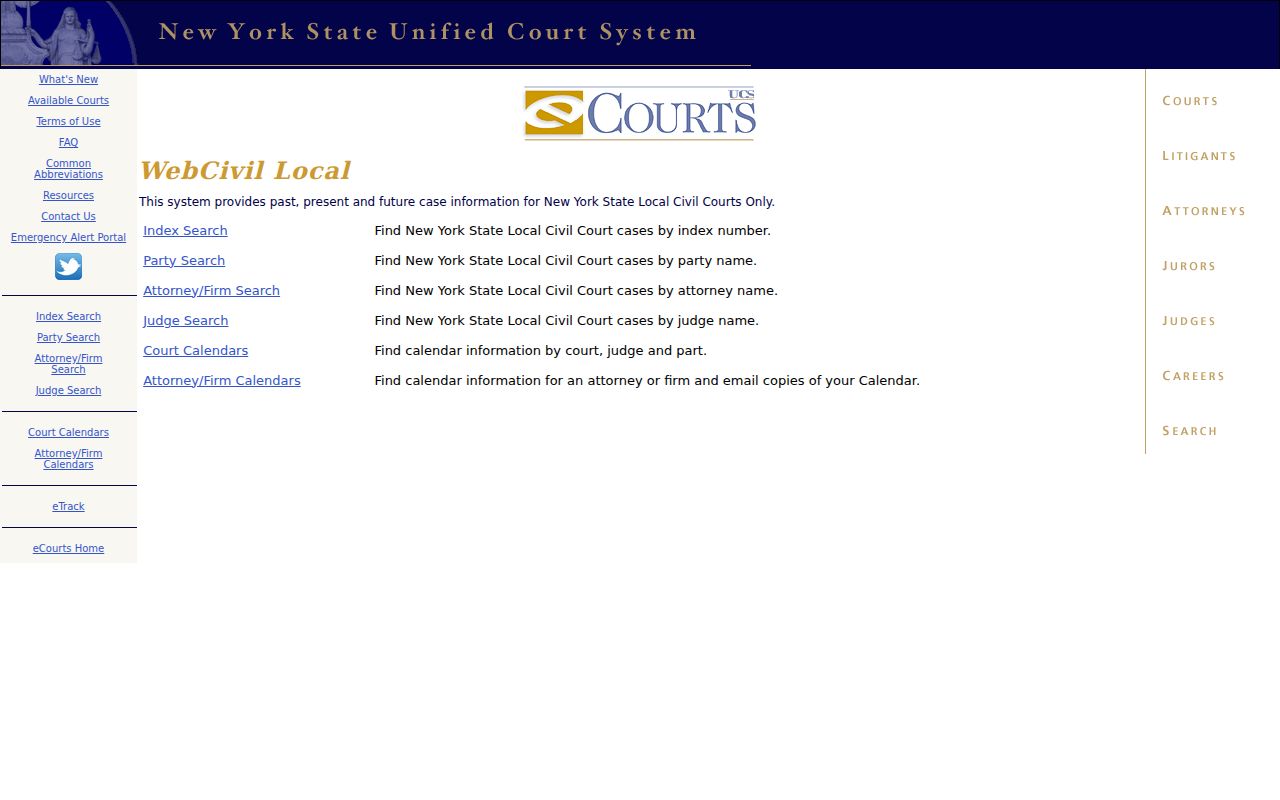
Treat the screen as an index starting point. Save the case reference, then follow the clerk's stated public-file process if a particular unsealed document is needed.
Verify a Southold Resident Lookup
Cross-checking prevents the most common lookup error: treating one official-looking line as a complete identity. Use an address only as an anchor. Then compare the person's name and date across independent sources. The County Clerk's land index is generally recorded and imaged online from 1987 forward. But the public index and a document image are different access layers. When the document itself matters, use the Clerk's copy or counter process. Never rely on a search snippet.
- Start with a specific name and a known Southold address, hamlet, or approximate period.
- Check the assessment result for owner name, mailing address, situs, and deed reference without assuming occupancy.
- Search the County Clerk index for the name and date range, then record grantor or grantee role, instrument date, liber or page, and tax-map context.
- Use the voter or court index only to corroborate the same identity, with its applicable access limits.
- Ask the original custodian for a public copy when a record must be confirmed beyond the index.
- Docket
- A court's running record of filings, events, and references in a case. It is not always the complete case file.
- Index versus image
- An index lists searchable fields such as parties and dates. An image is the underlying scanned record and can have separate access or copy rules.
- Certified copy
- A copy authenticated by the custodian for uses that require an official certification, rather than an ordinary research copy.
Southold Vital Record History
New York vital records are closed for recent events. Genealogy access opens on a schedule. Births unlock after 75 years, once death is proven. Marriages and deaths open at 50 years. Marriages also require proof that both spouses have died. The state sells copies through genealogy channels. Fees climb from $22 to $202. The total depends on how wide a search span you ask the state to run. The DOH-4384 genealogy application travels by mail. It asks for the event, the names, the date and place, proof documents, and payment.
For a Southold event you qualify for, the Town Clerk may move faster than the state. Greenport keeps its own registrar for village events. Certified copies of current records carry tighter eligibility rules. Order those through the proper local or state form. A genealogy copy, an index entry, and a certified certificate are three different products. Family-history work goes best when you know which one you actually need. Settle that before you write to the records office.
The New York State Archives vital-record guidance lays out the historical access path in plain terms.
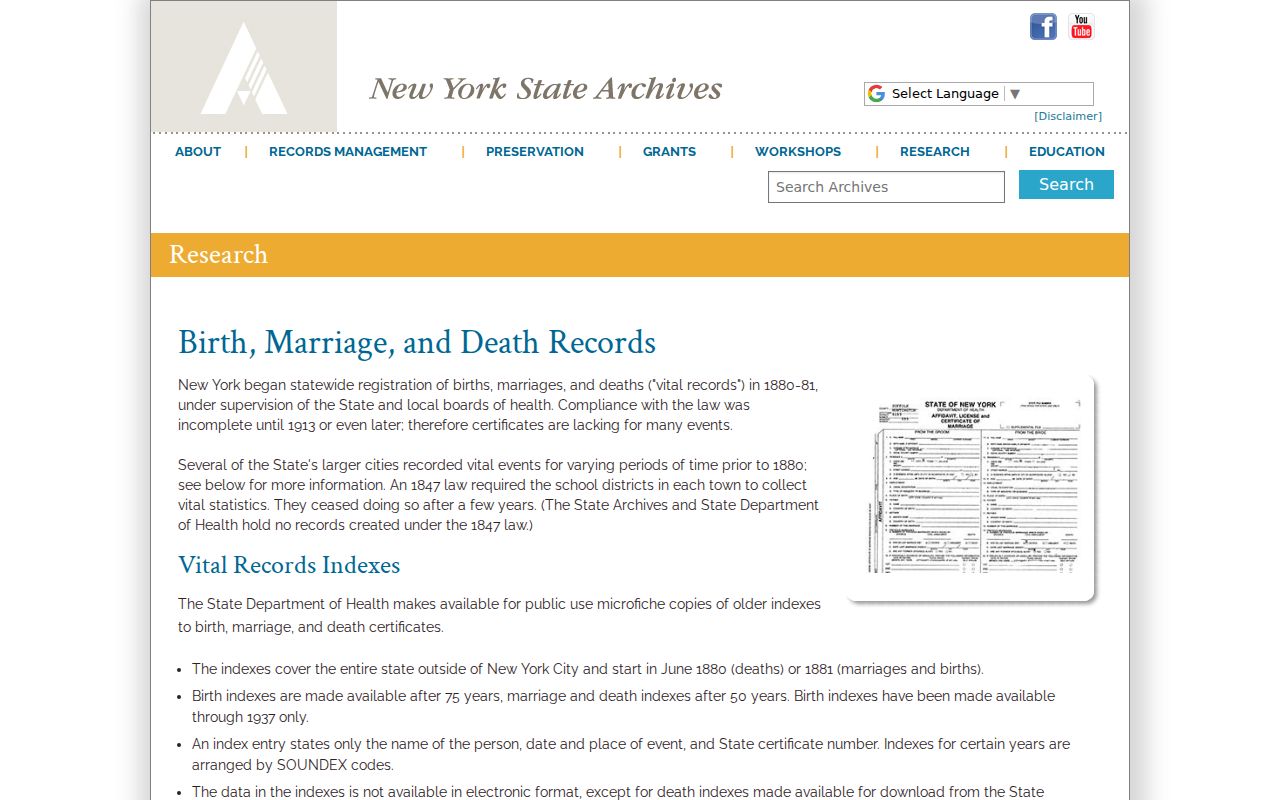
Pick the route that fits the era, then write to the registrar or the Department of Health that actually holds the record. Addressing the wrong custodian only burns weeks.
Note: Eligibility and custodian rules still govern a recent vital record, even when a historical index or obituary names the same person.
Southold Family-History Records
An heir search, a lost classmate, or a family-history puzzle each start at the record keeper. That record keeper covers a particular period. An obituary, cemetery listing, or old newspaper often hints at relatives and where they lived. Then layer on an estate file where public access applies, a deed, or a historical city directory. The Southold Free Library brings HeritageQuest, in-library AncestryPlus, newspapers, scanning tools, and local-history staff to one desk. The Southold Historical Society holds research material on houses, title chains, cemeteries, and local families. Its material is available by appointment.
Yearbooks and newspapers fill the gap when a modern record is off limits. A historical street directory may list an occupation and a locality. It may use those instead of a house number. Keep the spellings and local labels as written. Birth-parent questions belong to New York's authorized adoption-information route, not guesswork assembled from public fragments. Confirm the Department of Health route before relying on any single program page.
Southold Records When Online Ends
Online searching ends where the custodian's boundary begins. A deed or court index may name a record while withholding its image. Older land material can live at the Suffolk County Clerk in Riverhead, in historic books, on microfilm, or in local collections. Where no public town search exists, the Town records access route is the channel: name the office, the record type, the person or parcel, the date range, and your preferred electronic format. Vital and certified court copies belong with their own custodians instead.
New York's Freedom of Information Law sits in Public Officers Law Article 6, §§84-90, with rules at 21 NYCRR Part 1401. It does not force disclosure of exempt private or safety-sensitive material. An agency answers in writing within five business days by granting, denying, disclaiming possession, or acknowledging the request with an approximate determination date. The state FOIL guidance walks through that process.
Southold Resident Lookup Privacy Limits
New York opens records by category, not every detail about every person. The Address Confidentiality Program, Executive Law §108, gives eligible participants a substitute mailing address. Court redaction rules, voter protections, vital-record closure, and the federal Driver's Privacy Protection Act also shield sensitive data. These laws cover address and identity details. The ACP does not scrub every old record from a residents directory or property roll. It also never justifies stitching unrelated sources together to expose someone's actual address.
The current New York Address Confidentiality Program application supports protected participants and households. Eligibility categories are set by the Department of State. A suspected error in a resident lookup goes to the assessor, election board, court, or license office. It can also go to another custodian that created the record. Never publish a guess and call it a correction.
Lawful use. Use Southold public records for personal, lawful research. Do not use names, addresses, or record fragments to stalk, harass, intimidate, or harm anyone.